“In the beginning, there was silence. And in that silence, a small yellow duck waited.”
The Book Project
A picture book for the isolated age. The story of a small yellow duck and the profound power of talking through your problems.
“Two minds meet not in agreement, but in the space between—where understanding grows.”
“The moment of clarity arrives not with thunder, but with a gentle 'ah'—and a smile.”
“A pond of listeners, each waiting for their turn to help a mind find its way.”
“Within you is the wisdom you seek. The duck simply holds space while you find it.”
Support the Book
This book is being written for the isolated age — for anyone who has ever felt stuck, confused, or alone in their thinking. It is a picture book for adults who forgot they were allowed to ask for help.
What It Is
A full-color illustrated picture book. Short enough to read in one sitting. Deep enough to stay with you.
Who It’s For
Anyone who has ever talked to themselves while working through a problem. (That’s everyone.)
When It’s Coming
The manuscript is in progress. Join the mailing list to be notified when it’s ready.
WHILE YOU WAIT
Recommended Reading
The book is still being written. In the meantime, these are the books that shaped our thinking about debugging, software craft, and the art of solving problems clearly.

Debugging by David J. Agans
Nine indispensable rules for finding even the most elusive software and hardware problems.
View on AmazonAs an Amazon Associate we earn from qualifying purchases.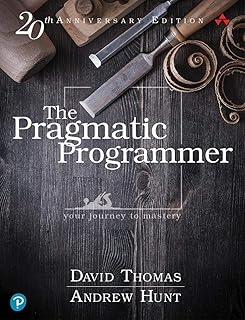
The Pragmatic Programmer
From journeyman to master. The career-shaping guide to thinking about software and solving problems.
View on AmazonAs an Amazon Associate we earn from qualifying purchases.
A Philosophy of Software Design
Complexity is the enemy. Ousterhout teaches you to recognize it and fight it at the source.
View on AmazonAs an Amazon Associate we earn from qualifying purchases.As an Amazon Associate we earn from qualifying purchases.
FAQ
Questions for Curious Ducks
Wonderings from fellow travelers on the path of patient problem-solving.
Why a duck?
Because it is the world's most patient listener. A duck will never interrupt to offer a solution before you've finished thinking. A duck will never judge your confusion or roll its eyes at your “silly” questions. A duck simply sits, present and attentive, while you work through what you need to work through.
The original story traces back to a computer science legend, but the truth is older: humans have always needed something to talk to.
Is this just for coders?
Not at all. While the practice has roots in software engineering, the magic of rubber duck debugging belongs to anyone with a thought that needs to be set free. Writers use it to untangle plot knots. Students use it to understand complex concepts. Parents use it to work through difficult conversations. Therapists sometimes call it “externalization.”
If you have a problem, a question, or a confusion that feels stuck inside your head, you have a use for the duck.
Does it have to be a rubber duck?
Absolutely not. Your duck can be a stuffed animal from childhood, a smooth stone from a favorite beach, a potted plant, or even a photograph of someone who listens well. The object is merely a focal point—a physical anchor for your attention.
What matters is the ritual: the intentional act of speaking your thoughts aloud to a patient presence. The form is flexible. The practice is what transforms.
What if I feel silly talking to a duck?
That's perfectly natural. There's a certain vulnerability in speaking our unformed thoughts aloud, even to an inanimate object. The silliness you feel is often a mask for the fear of being heard imperfectly.
But consider: the duck has no opinion of you. It cannot think you foolish. It cannot misunderstand. In this safe space, you are free to be confused, to stumble, to start over. The silliness fades. What remains is clarity.
How is this different from talking to an AI?
AI offers answers. The duck offers presence. When you talk to an AI, you are often seeking information—an external solution to an internal puzzle. When you talk to a duck, you are seeking clarity—the organization of your own thoughts through the act of verbalization.
Both have their place. But there is something uniquely human about working through a problem with no one but yourself, guided only by the sound of your own voice finding its way home.